
Noise tailoring for error mitigation and for diagnozing digital quantum computers
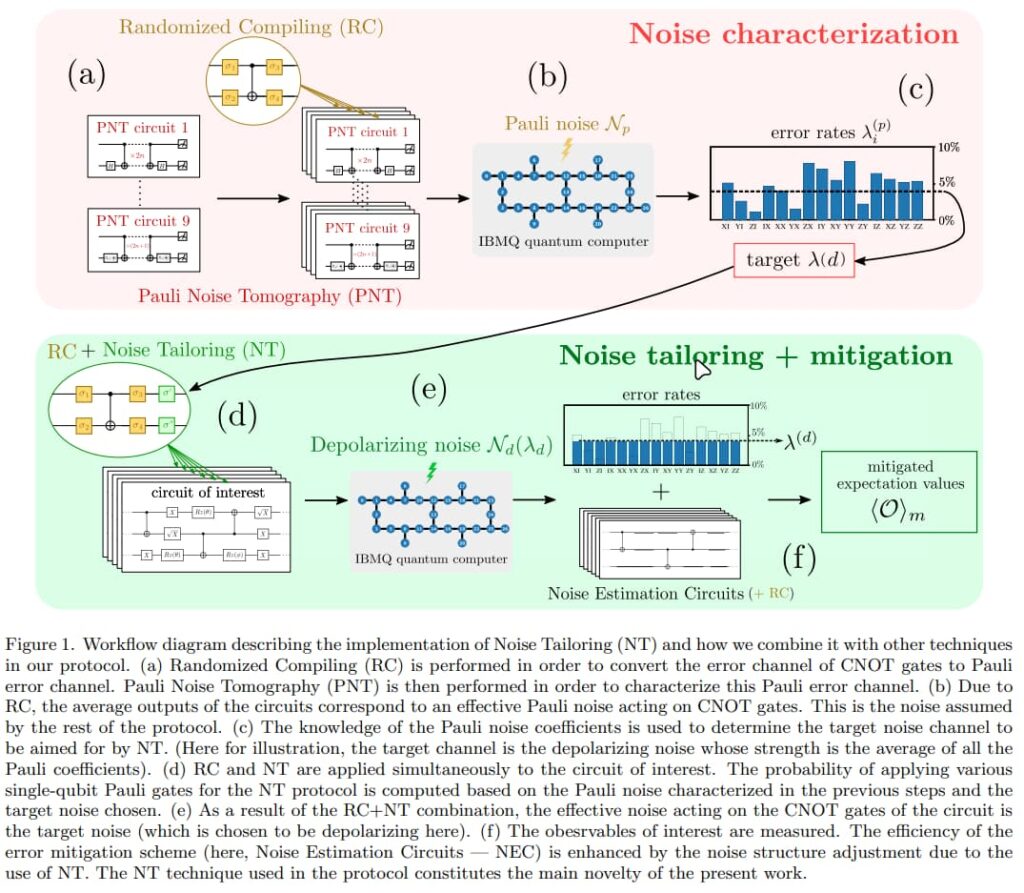
We introduce Noise Tailoring (NT)—an innovative strategy designed to modify the structure of the noise associated with two-qubit gates through statistical sampling
Resources showcasing technology and research in the Company
We introduce Noise Tailoring (NT)—an innovative strategy designed to modify the structure of the noise associated with two-qubit gates through statistical sampling
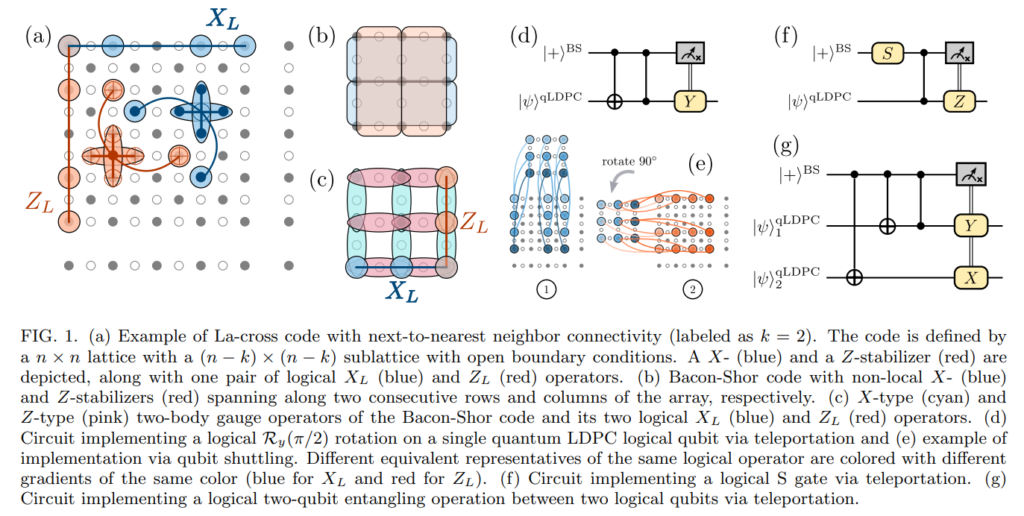
We introduce a gate-based protocol for addressable single- and multi-qubit Clifford operations on individual logical qubits encoded within one or more quantum LDPC codes and demonstrate the implementation of an overcomplete logical Clifford gate set.
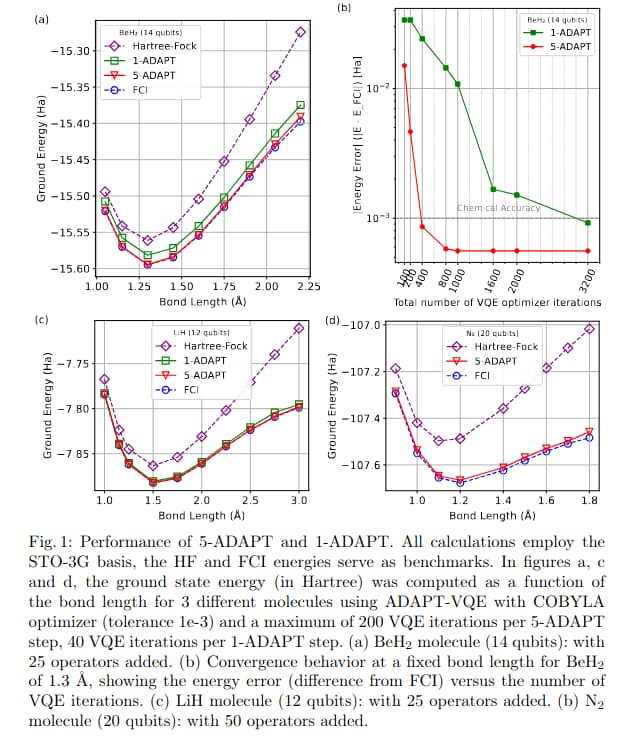
K-ADAPT-VQE accelerates molecular ground state simulations by appending operators in groups of K, significantly reducing the iterations and quantum function calls needed to reach chemical accuracy compared to standard adaptive methods.
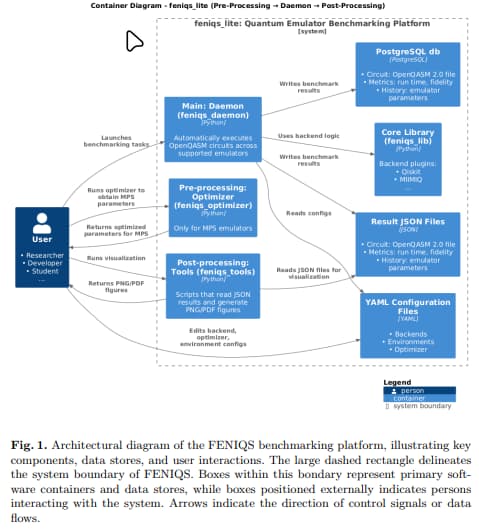
We present an open-source, user-centric, problem-agnostic framework with a unified API for twelve leading emulators, delivering detailed performance insights for quantum computing research and development.
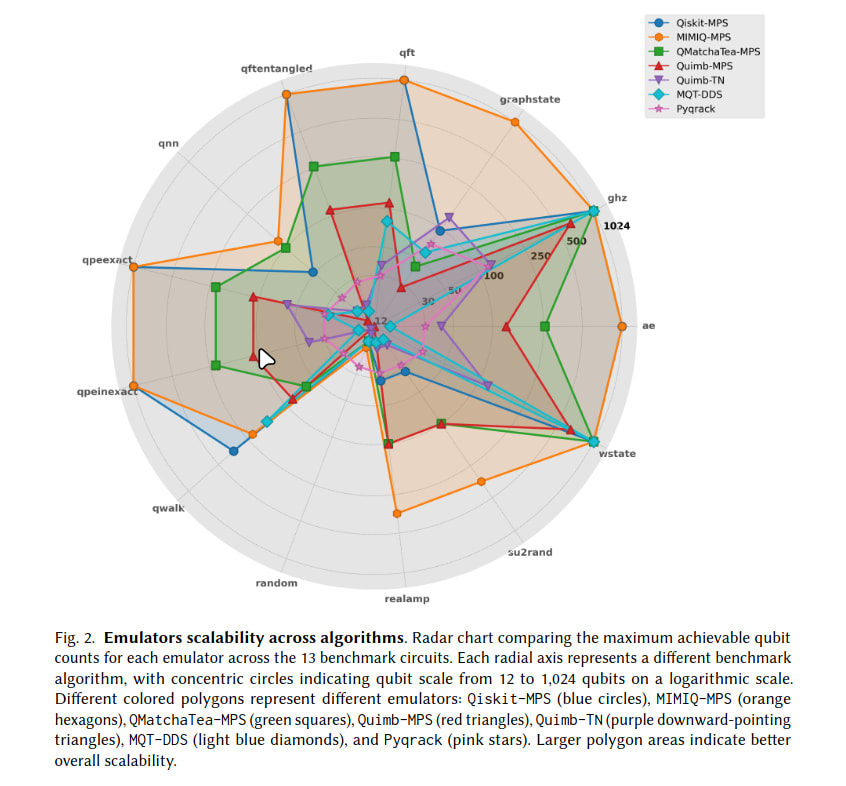
We benchmark seven state-of-the-art quantum emulators employing techniques such
as tensor networks, matrix product states (MPS), decision diagrams, and
factorized ket based methods, on utility-scale quantum algorithms.
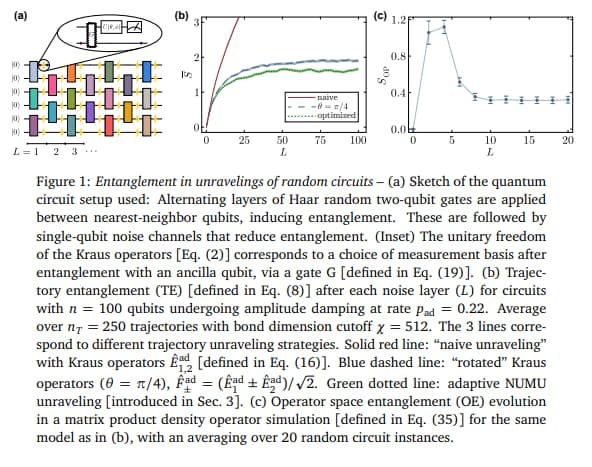
This work presents a new unraveling strategy for the density matrix into pure state trajectories that can adaptively minimize the averaged entanglement in the trajectory states. Uses MIMIQ by QPerfect
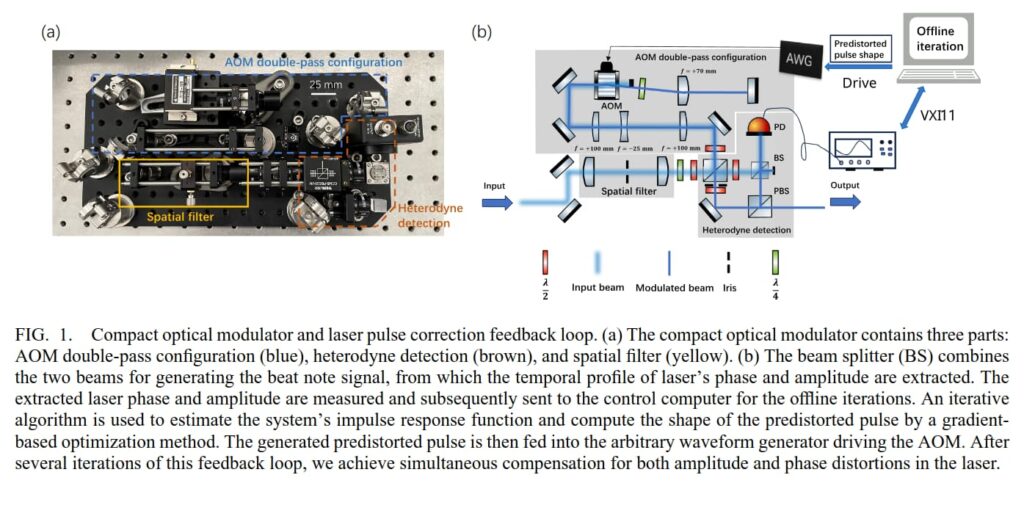
Compact arbitrary optical waveform modulator utilizing a digital feedback loop to generate precisely-shaped laser pulses suitable for realizing quantum logic gates with durations down to 180 ns.
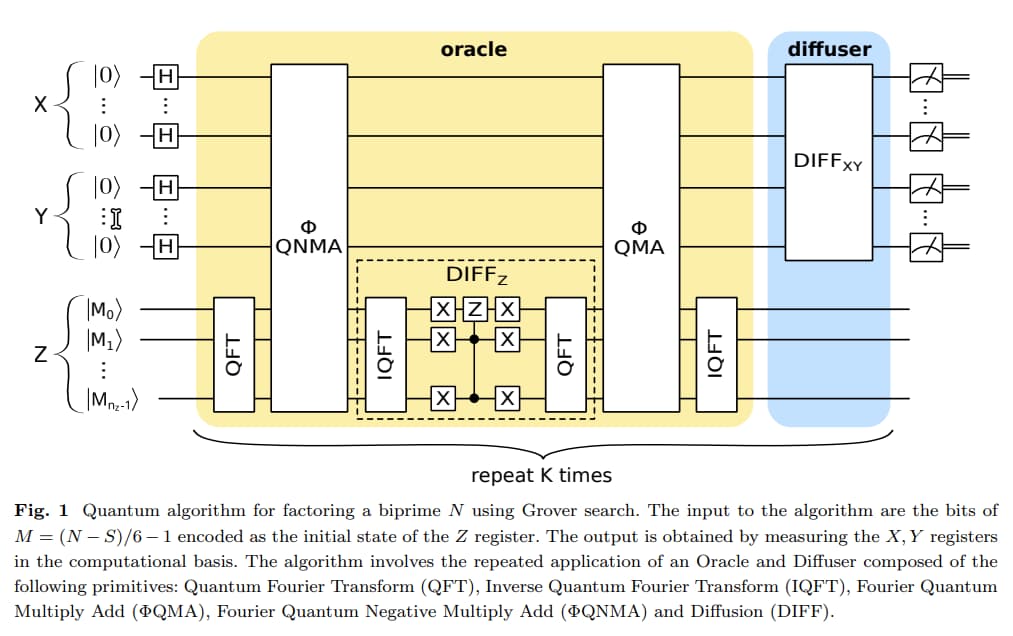
A quantum algorithm for facturing products of prime numbers which exploits Grover search to factor any n-bit biprime numbers using 2n-5 qubits or less.